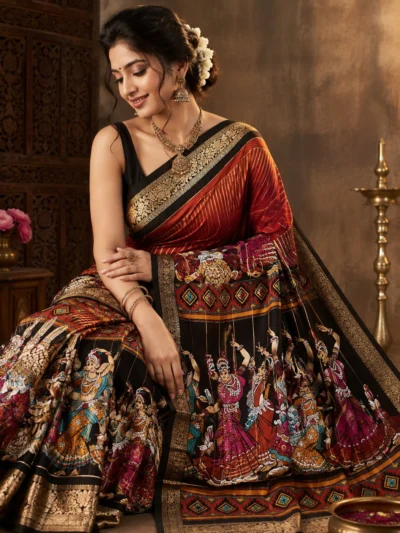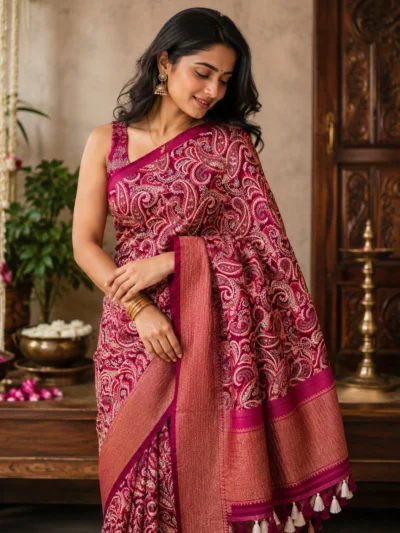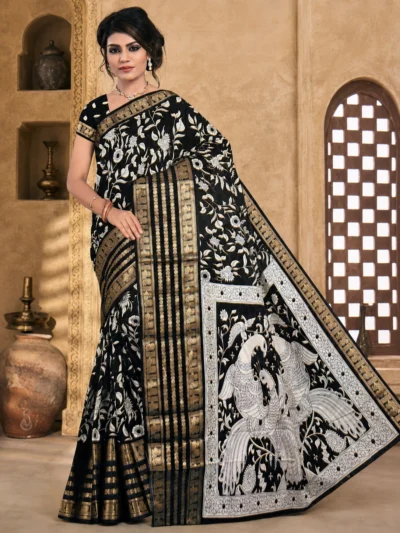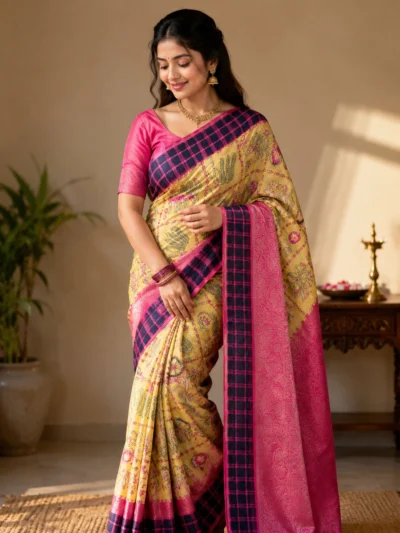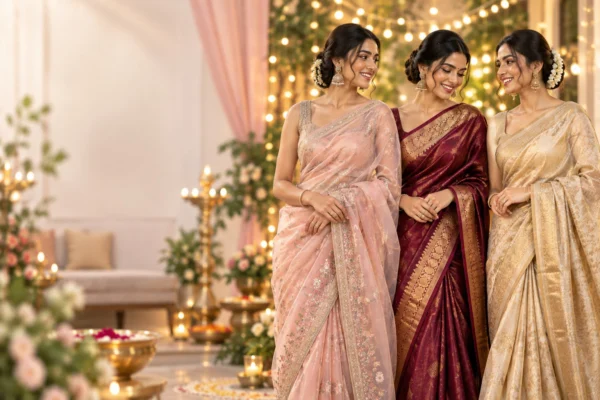
For a wedding or reception, choose your party wear saree by three things: the time of the function, how long you will be on your feet, and how formal the family is. Light georgette or soft silk in bright colours works best for daytime ceremonies, while sequins, zari and deep jewel tones shine at evening receptions. If you are unsure, a lightweight silk saree with a gold zari border is the safest choice for almost any wedding.
Start with the time of day
Daylight and evening lighting change how a saree looks. What glows under reception lights can look flat or loud at a 10 AM muhurtham, and a pastel that looks lovely in the sun can disappear in a dim hall.
Morning and daytime ceremonies
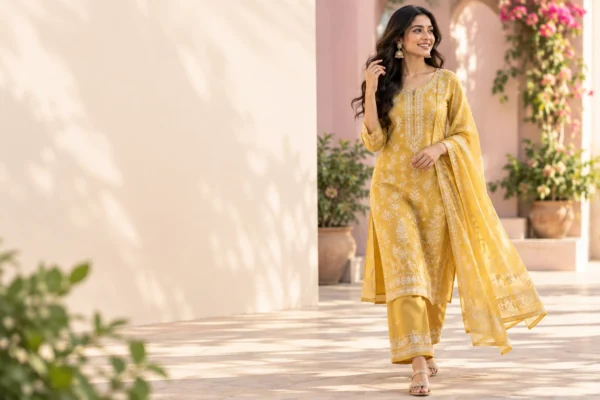
Haldi, mehendi, muhurtham and lunch receptions call for fabrics that breathe and colours that feel fresh. Georgette and light silks are ideal because they do not trap heat, and they stay neat through long rituals. Go for yellows, rani pink, parrot green, orange or printed sarees with a bit of zari. Keep shimmer low; heavy sequins can look harsh in direct sunlight.
Evening receptions and sangeet
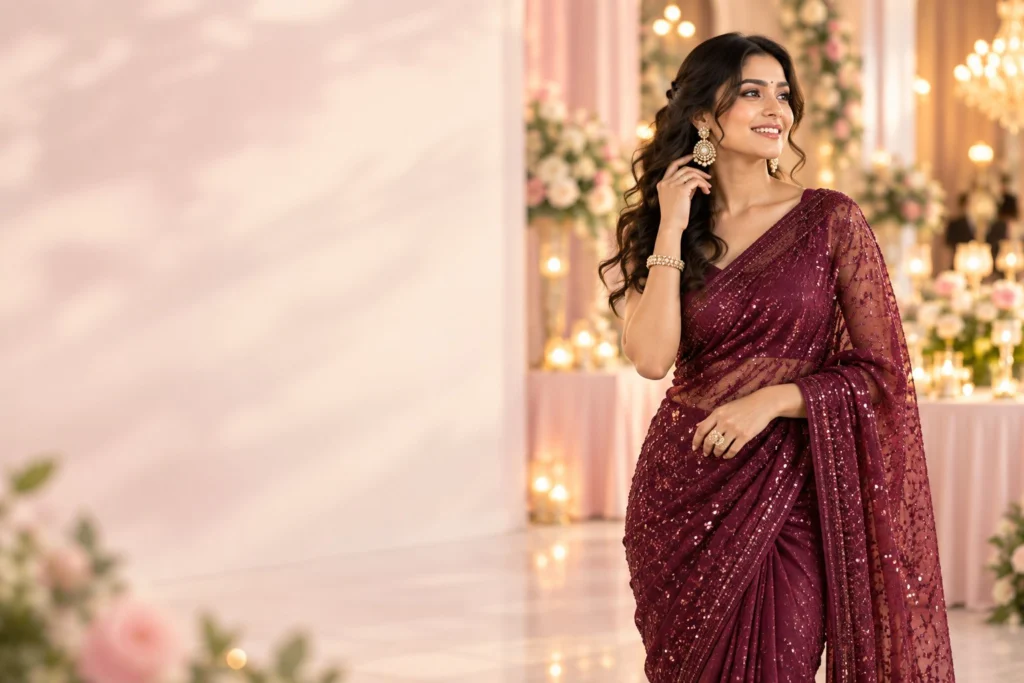
Evenings are where you can dress up. Sequin work, broad zari borders and rich shades like wine, purple, magenta, black and deep blue catch the light and photograph well on stage. A saree such as the cream and maroon Sweet Dreams sequin saree (₹699) suits exactly this setting: a diamond-lattice shimmer with a maroon embroidered blouse piece, and light enough to keep on until the last dance.
Match the saree to your role at the wedding
A guest, a close cousin and a friend attending only the reception each have different needs. Think about how much you will move around, how many photos you will be in, and whether you will be helping with rituals.
- Close family: you will be in most photos and on your feet for hours. Choose a silk with a proper border and pallu, but keep the weight light.
- Regular guest: a georgette or soft silk with moderate work is enough. You want to look festive without competing with the bride’s family.
- Reception-only guest: this is the moment for sequins, bold prints or a darker evening shade.
- Office colleague’s wedding: a printed or lightly worked saree in a bright colour is polished and easy to manage after work.
Quick guide: occasion, fabric and colour
| Occasion | Fabric that works | Colours to try | Level of work |
|---|---|---|---|
| Haldi / mehendi | Georgette, light printed sarees | Yellow, green, orange, pink | Light prints, minimal shimmer |
| Muhurtham / day wedding | Binny silk, Dola silk | Rani pink, wine, magenta with gold | Zari border and pallu |
| Sangeet | Georgette, sequin sarees | Purple, magenta, bright contrasts | Sequins or embroidery, easy to move in |
| Evening reception | Sequin, georgette, silk | Wine, black, deep purple, cream with maroon | Shimmer, broad zari, statement blouse |
| Engagement / small function | Soft silk, printed designer sarees | Jewel tones, Kalamkari prints | Moderate work |
Choosing the fabric for a long function
Weddings are long. Between travel, rituals, lunch and photos you may wear the saree for eight hours or more, so comfort matters as much as looks.
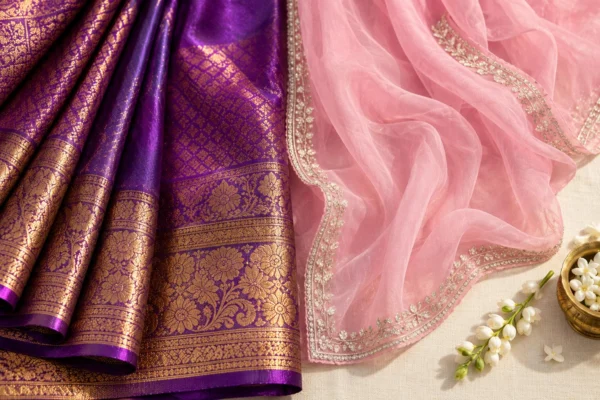
Georgette is light, falls well and pleats cleanly, which is why it is the go-to for dancing and crowded halls. It also forgives a little creasing. Binny silk and Dola silk give you the sheen and formality of silk without the weight of heavier traditional silks. The wine purple Binny silk saree with a Paithani-style pallu (₹749) is a good example: gold zari borders and a multicolour floral pallu that look wedding-ready, while staying light to wear all day.
If you are torn between the two, our guide on silk vs georgette sarees compares drape, comfort and care in detail.
Colours: what works and what to think twice about
Indian weddings generally love colour, so bright and rich shades rarely go wrong. A few practical points help:
- Red and deep maroon are often associated with the bride. Many guests prefer wine, magenta or rani pink instead, which give a similar richness.
- Pure white is avoided by many families for weddings. Cream with coloured borders or a contrast blouse is a safer way to wear a light shade.
- Black is a matter of family custom. It is usually fine for an evening reception or cocktail party, especially with gold or white detailing, but skip it for a morning ceremony if the family is traditional. The Black Berry georgette saree with white floral print and gold zari bands (₹849) is the kind of black saree that suits a reception rather than a muhurtham.
- Check the dress code. Many families now set a colour theme for sangeet or haldi. A quick message to the host saves a last-minute change.
The blouse makes or breaks the look
All our sarees come with an unstitched blouse piece, so give your tailor at least a week or two before the wedding. A few tips:
- For heavy sarees, keep the blouse design simple so the saree stays the focus.
- For plain or lightly printed sarees, a contrast or embroidered blouse adds instant glamour.
- Elbow-length sleeves look graceful for day ceremonies; sleeveless or short sleeves suit evening receptions.
- Always do a trial with the saree draped, not just the blouse on its own.
Finishing the look without overdoing it
Balance is the rule. If the saree has heavy zari or sequins, wear a single statement piece, such as long earrings or a choker, rather than everything at once. With a simpler saree, you can layer bangles, a necklace and a maang tikka.
Pick footwear you can stand in for hours; block heels or embellished flats are kinder than stilettos on temple floors and lawns. A small potli or clutch holds your phone, safety pins and a comb. Pin the pleats and the pallu securely, especially if you will be dancing or carrying plates at the buffet. If you are new to draping, practise once at home a day before.
You can browse our full range of party wear sarees, priced between ₹699 and ₹899.
Frequently asked questions
Which saree fabric is best for a wedding guest?
For most wedding guests, a lightweight silk such as Binny silk or Dola silk is the best all-round choice. It looks formal, has a soft sheen in photos, and stays comfortable through a long function. Georgette is a close second, especially if there will be dancing.
Can I wear a black saree to an Indian wedding?
It depends on the family and the function. Black is widely accepted at evening receptions and cocktail parties, particularly with gold zari or light prints. For morning ceremonies with traditional families, a brighter shade is the safer option.
What saree should I wear to a daytime wedding?
Choose a breathable fabric like georgette or a light silk in fresh colours such as yellow, pink, green or orange. Keep sequins and heavy shimmer minimal, since they can look harsh in sunlight. A zari border adds enough festivity for a day ceremony.
Are sequin sarees suitable for weddings?
Sequin sarees are best for evening events like the reception or sangeet, where the shimmer catches the lights. Lightweight sequin sarees are comfortable enough to dance in. For a morning muhurtham, silk or a printed saree usually suits the setting better.
How early should I buy a saree for a wedding?
Aim to buy the saree at least two to three weeks before the function. That gives your tailor time to stitch the included blouse piece and leaves room for a fitting trial. It also covers delivery time if you are ordering online.