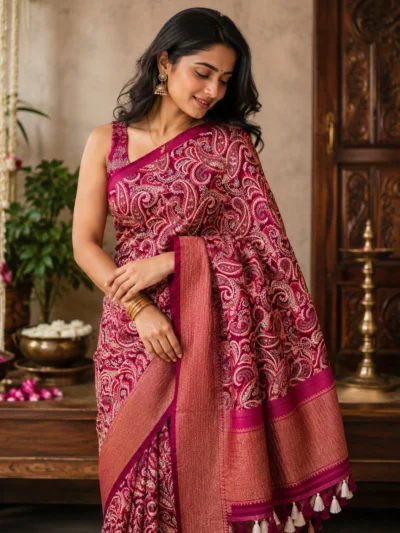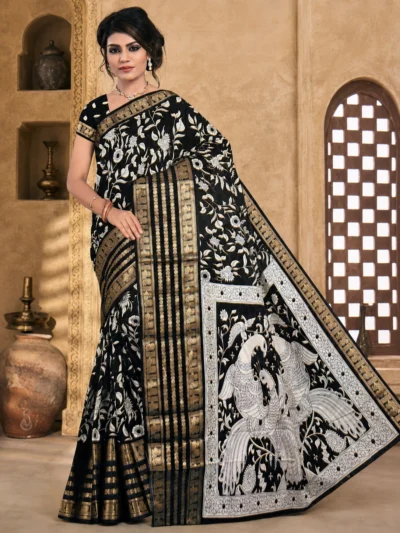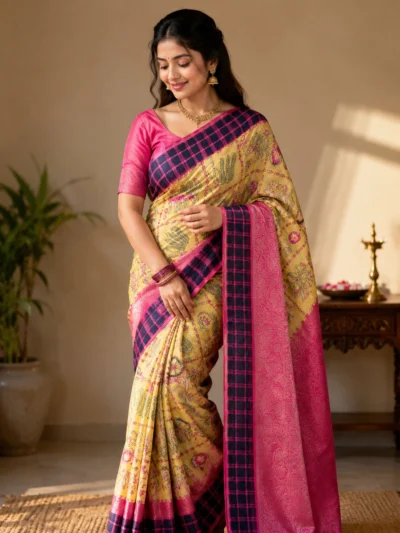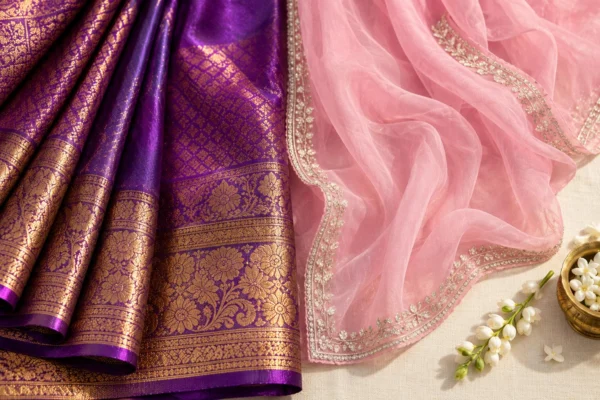
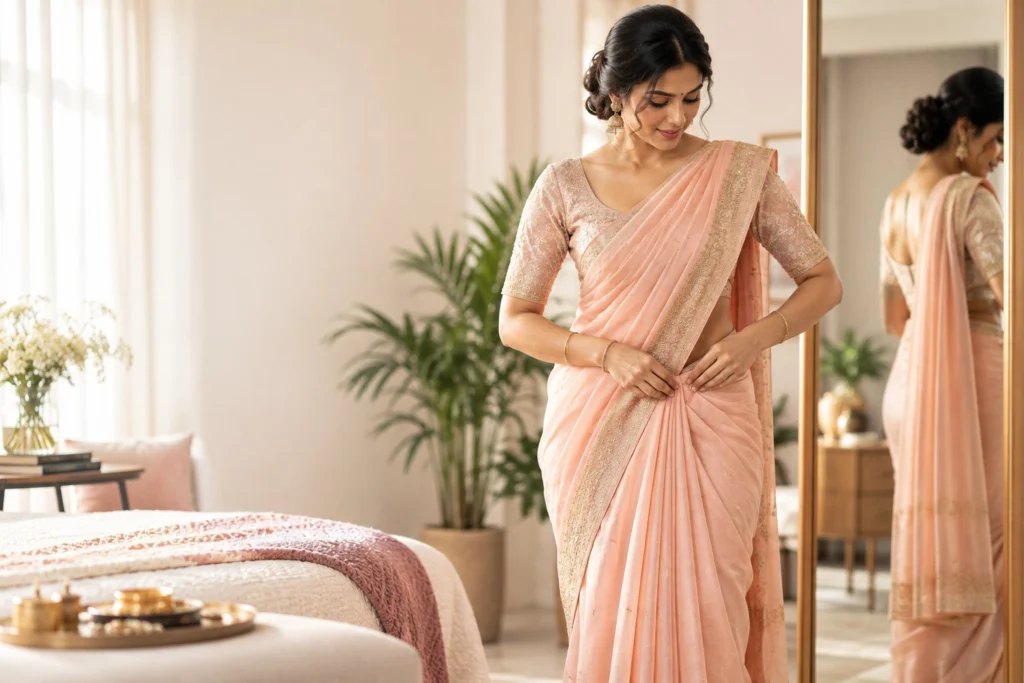
To drape a saree, tuck the plain end into your petticoat and wrap it once around your waist, make 5-7 even pleats and tuck them in at the navel, then take the remaining fabric around your body and over your left shoulder as the pallu. Pin the pallu and pleats, then adjust the hem and border. With a little practice, the whole drape takes under five minutes.
This is the classic Nivi drape, the style most women across India wear to work, weddings and parties. Below, each step is explained in detail, along with what you need before you begin, common mistakes and which fabrics make learning easier.
What you need before you start
- A fitted petticoat in a colour close to your saree. Tie it firmly at the waist, because the whole drape is tucked into it.
- A well-fitted blouse. A loose blouse makes the pallu slip.
- Your footwear. Wear the heels or sandals you plan to use so the hem length comes out right.
- Safety pins, at least three or four.
- A mirror, ideally full length.
Our sarees are 5.5 m with a 0.8 m unstitched blouse piece included, so get the blouse stitched well before the day you plan to wear it.
Step 1: Start with the right base
Wear your petticoat and blouse first. Find the plain, inner end of the saree (the end without the decorated pallu). Holding the top edge, tuck it into the petticoat at your navel, slightly to the right, and wrap it around your waist once from right to left, tucking it in all the way around.
Check the length at this stage. The lower edge should sit just above the floor, covering your footwear. If it is too long, tuck a little more fabric in at the top; if it is too short, pull some out. Getting this right now saves re-doing the whole drape later.
Step 2: Make the pleats
Take about a metre of fabric from the tucked end and fold it into 5-7 even pleats, roughly 4-5 inches wide, pleating from left to right. Use your thumb and little finger as spacers to keep the folds equal.
Gather the pleats together at the top, then gently shake them or run your hand down so they fall straight and line up at the bottom. Tuck them in at the navel, slightly to the left, with the folds facing left. Many women put a safety pin across the pleats at the top before tucking, so they do not spread apart during the day.
If the pleats flare out at the bottom, hold them at the base and tug them straight, then smooth the fabric downwards once more.
Step 3: Wrap the pallu
Take the remaining fabric around your back once more, from left to right, bringing it to the front under your right arm. Now lift it diagonally across your chest and over your left shoulder.
For a classic look, let the pallu fall to about knee length at the back. You can leave it open and flowing for a party, or pleat it into narrow folds for a neater, more formal finish. A pleated pallu is easier for beginners because it stays put.
Step 4: Pin it in place
Pin the pallu to the blouse at the left shoulder, pinning from the inside so the pin does not show. Add a second pin at the waist pleats if you have not already. For long functions, a third pin at the back of the waist, holding the pallu fabric to the petticoat, stops the drape from loosening as you move.
Use small, rust-free pins and avoid pinning through zari or delicate prints, which can snag.
Step 5: Adjust and finish
Stand in front of the mirror and check a few things: the border runs in a clean line at the hem, the pleats fall straight, the pallu covers as much of the midriff as you want, and nothing is pulling at the waist. Adjust the pallu width by opening or tightening its folds. Walk a few steps and sit down once to see if anything shifts, then fix it before you leave.
Common draping mistakes and how to fix them
| Problem | Likely cause | Fix |
|---|---|---|
| Hem too long or uneven | Length not checked in step 1 | Re-tuck the top edge while wearing your footwear |
| Pleats spreading apart | Loose tuck or no pin | Pin the pleats at the top before tucking |
| Pallu slipping off the shoulder | No pin or a loose blouse | Pin from inside the blouse at the shoulder |
| Bulky waist | Too much fabric tucked in | Tuck flat, use a thinner petticoat, try a lighter fabric |
| Drape loosens by evening | Petticoat tied loosely | Tie the petticoat firmly and add a waist pin at the back |
Which fabrics are easiest to drape?
If you are a beginner, lightweight fabrics like georgette and chiffon are the easiest to drape. They pleat neatly, stay close to the body and forgive small mistakes. The Violet Glow georgette designer saree (Rs.699) is feather-light even with its zari border, and the Sunlit Comfort printed daily wear saree (Rs.749) is soft and easy to drape, which makes it a good one to practise with.
Silk has more body, so the pleats need firmer handling, but it holds a crisp shape once pinned. Read our comparison of silk vs georgette sarees to see how the two drape differently, or browse the georgette sarees collection for beginner-friendly options.
Frequently asked questions
How long does it take to drape a saree?
Your first few attempts may take 15-20 minutes. With regular practice, most women can drape a neat Nivi-style saree in under five minutes. Practising the pleats on their own a few times helps the most.
How many pleats should a saree have?
Most drapes use 5-7 pleats, each about 4-5 inches wide. Fewer, wider pleats suit taller women and heavier fabrics, while more, narrower pleats give a fuller look with light fabrics like georgette.
How do I stop my saree pleats from opening?
Pin the pleats together at the top before tucking them into the petticoat, and make sure the petticoat is tied firmly. Tucking the pleats flat and deep also keeps them from slipping out as you move.
Which side should the pallu go on?
In the classic Nivi drape, the pallu goes over the left shoulder and the pleats are tucked slightly to the left of the navel. Some regional drapes, such as the Gujarati style, bring the pallu to the front over the right shoulder instead.
What is the easiest saree fabric for beginners?
Georgette and chiffon are the easiest because they are light, pleat neatly and fall naturally. Printed georgettes are especially forgiving, since uneven folds are less noticeable than on a plain or heavy silk saree.