To keep silk sarees looking new, dry clean them instead of washing, store them folded in a muslin or cotton cloth away from sunlight and moisture, and iron them on low heat from the reverse side. Refold and air them every few months so the creases and zari do not weaken in one place. These few habits prevent most of the damage that dulls silk over time.
Silk is a delicate fabric, but it is not difficult to look after once you know what harms it. Below is a practical routine you can follow at home, from the day you wear a saree to the day you put it away for the season.
Dry clean, don’t wash
Silk and designer sarees should be dry cleaned. Water and regular detergent can strip the natural sheen, make colours bleed and cause zari to tarnish or stiffen. Choose a dry cleaner you trust, point out any stains, and ask them not to press heavily over zari borders.
You do not need to dry clean after every wear. If a saree was worn for a few hours and has no stains or sweat marks, simply air it and store it. Frequent dry cleaning wears the fabric faster than occasional careful use.
Cotton and linen sarees are different. They can be hand washed in cold water with a mild detergent. Lightweight georgettes with simple prints can often be hand washed gently too, but heavily worked pieces are safer with a dry cleaner.
Deal with stains the right way
Stains are the most common reason silk sarees get ruined, usually because of what happens in the first few minutes.
- Blot, never rub. Press a clean, dry cotton cloth on the spot to lift liquid. Rubbing pushes the stain deeper and roughens the surface.
- Oil and food stains: sprinkle a little talcum powder on the spot, leave it for a few hours to absorb the oil, then brush it off gently.
- Do not use soap or bleach on silk. It can leave a permanent watermark or pale patch.
- Take it to the dry cleaner soon. Old stains are much harder to remove, so do not store a stained saree for months.
Store them folded, not hung
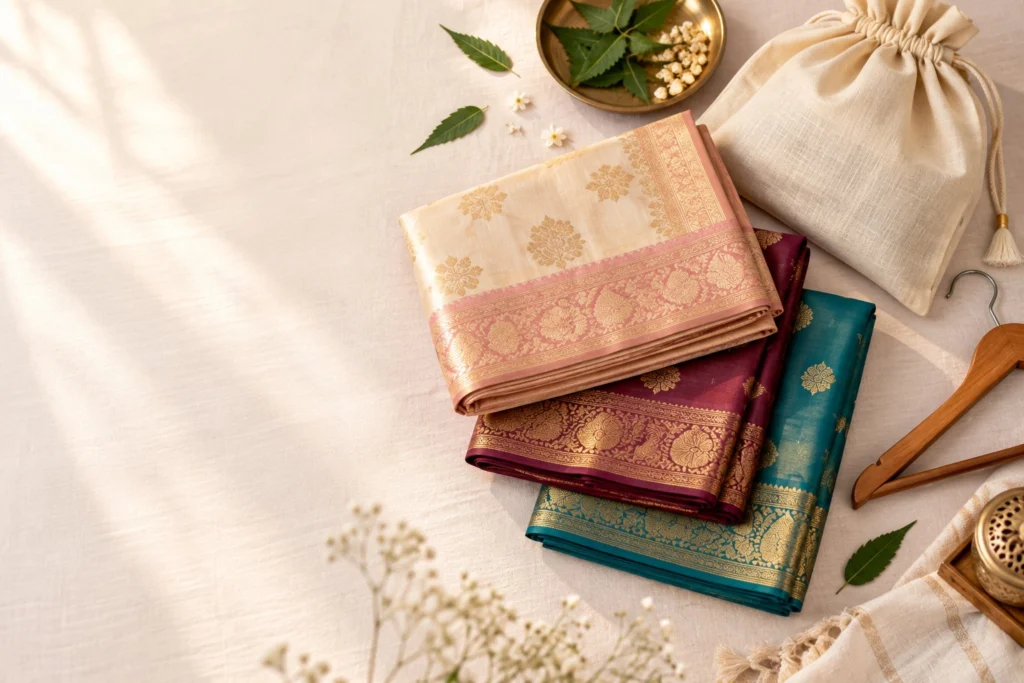
Hanging a silk saree for long periods stretches the fabric and can pull the weave out of shape, especially where it rests on the hanger. Fold it instead, and wrap each saree in a muslin or soft cotton cloth. This lets the fabric breathe while protecting it from dust.
Avoid plastic covers for long-term storage. They trap moisture and can cause yellowing. Keep sarees away from direct sunlight, which fades colours unevenly along the folds.
Refold along different lines every two or three months. Zari and silk tend to crack or weaken along the same fold if it is never changed. Rolling heavier zari sarees around a cardboard tube is another good option if you have the space.
Keep moisture away
Moisture is the biggest enemy of silk. Damp cupboards lead to mildew, musty smells and dull patches that are hard to reverse. This matters even more in the monsoon months.
- Place a few silica gel sachets in your saree cupboard and replace them when they stop working.
- Dried neem leaves or cloves help keep insects away without the strong smell of naphthalene.
- Never spray perfume or deodorant directly on silk. The alcohol and oils can stain and weaken the fabric.
- Let a saree cool and air out before folding it after wear, so sweat does not settle into the fibres.
Iron on low heat
Always iron silk on the reverse side at a low temperature, using the silk setting if your iron has one. Keep the iron moving and do not let it rest in one spot.
For zari borders and embroidered areas, place a thin cotton cloth between the iron and the saree. Direct heat can flatten the work or discolour metallic threads. Avoid spraying water directly on silk while ironing, as it can leave water spots. If a saree is only lightly creased, hanging it in a steamy bathroom for a few minutes before you dress can be enough.
Air them out regularly
Once or twice a year, unfold your sarees and air them in shade for a few hours on a dry day. This keeps the fabric fresh, releases trapped moisture and lets you spot early problems such as small holes, loose threads or discolouration. Put them back with fresh folds.
Quick silk saree care checklist
| When | What to do |
|---|---|
| Right after wearing | Air in shade for a few hours, check for stains, then fold |
| If stained | Blot gently, use talc on oil, take to a dry cleaner soon |
| Before storing | Wrap in muslin or cotton, no plastic, no direct sunlight |
| Every 2-3 months | Refold along new lines, refresh silica gel or neem |
| Before wearing | Iron on low heat from the reverse, with a cloth over zari |
| Once or twice a year | Unfold and air all sarees in shade on a dry day |
Care tips for lightweight silk sarees
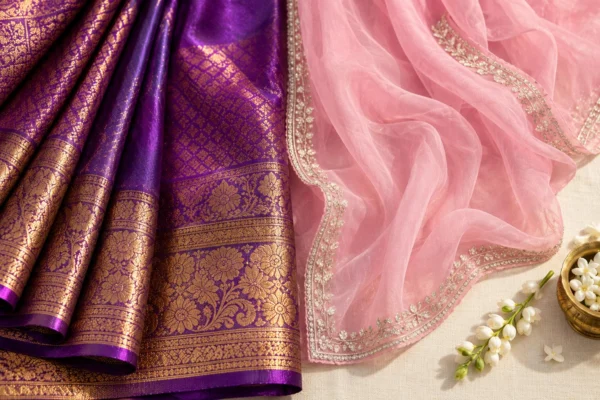
Lightweight silks such as Binny silk and Dola silk follow the same basic rules as heavier silks: dry clean, fold, keep dry and iron gently. Because they are thinner, they can show creases and water spots more quickly, so take extra care with steam and spills. The wine purple Binny silk saree with Paithani-style pallu (Rs.749) and the Rani Bloom Dola silk saree in magenta and purple (Rs.849) both have gold zari detailing, so use a pressing cloth over the borders when ironing.
If you are still deciding which fabric suits your lifestyle, our guide on silk vs georgette sarees compares how much care each one needs.
Explore our silk sarees collection and give every piece the care it deserves.
Frequently asked questions
Can I wash a silk saree at home?
It is best not to. Water and detergent can dull the sheen, cause colours to bleed and damage zari. Dry cleaning is the safest option for silk sarees, especially those with borders or embroidery.
How often should I dry clean a silk saree?
Only when it is stained or has been worn for a long day in the heat. After a short, clean wear, airing it in shade is usually enough. Dry cleaning too often wears out the fabric faster.
How do I store silk sarees to prevent damage?
Fold each saree and wrap it in a muslin or cotton cloth, then store it in a dry cupboard away from sunlight. Add silica gel sachets or dried neem leaves to control moisture and insects. Refold along new lines every two or three months.
Why is the zari on my silk saree turning black?
Zari usually tarnishes because of moisture, sweat, perfume or contact with plastic and rubber. Store the saree wrapped in cotton, keep it dry and never spray perfume directly on it. Once zari darkens, a professional dry cleaner is your best option.
What temperature should I iron a silk saree at?
Use the lowest or silk setting and iron on the reverse side. Place a thin cotton cloth over zari and embroidery, keep the iron moving and avoid spraying water directly on the fabric.